

Business Operation · 2025
In this section23 topics
- Corporate Information4 items
- Dividend Policy2 items
- Major Shareholders2 items
- Business Strategies Overview6 items
- Material Changes & Developments1 item
- Use of Proceeds from Securities Offerings1 item
- Commitments Made in the Registration Statement1 item
- Group Operating-Structure Policy1 item
- Companies Where the Company Holds ≥10%1 item
- Shareholders with Potential Conflict of Interest1 item
- Relationships Among Major Shareholders1 item
- Shareholders' Agreement1 item
- Shareholding Diagram (Group Structure)2 items
- Income Structure3 items
- Product / Service Characteristics3 items
- Research & Development6 items
- Assets Used in the Business6 items
- Marketing Policy & Competition3 items
- Procurement of Products & Services7 items
- Nature of Business — Overview1 item
- Projects Under Construction1 item
- Debentures & Bills of Exchange1 item
- Convertible Securities1 item
Corporate Information
Company Name
Silicon Craft Technology Public Company Limited
Telephone
0-2589-9991
Website
www.sic.co.th
ir@sic.co.th
Dividend Policy
Dividend Policy
The Company has policy to pay dividends to shareholders at the rate of not less than 50% of the profit after deducting all reserves. The Company may consider paying dividends different from the established policies depending on the performance, The Company’s financial status, liquidity, investment plan, including factors related to management, necessity, and other suitability in the future as the Board of Directors deems appropriate. This action must be in the best interests of the shareholders of the Company.
The decision to declare and pay annual dividend must be declared and approved at the Shareholders Annual General Meeting upon the recommendation of the Company’s Board of Directors. In the case of interim dividend, the Board of Directors may in its discretion declare an interim dividend based upon profits arrived at an appropriate level that would allow the Company’s operation and publicly communicate to the shareholders in the subsequent shareholders meeting.
The paying of interim payment is determined by the Company’s Board of Directors and is subject to change depending on the business operation, financial status, liquidity, investment plan, and other necessities and factors deemed appropriate to the future business operation by the Board of Directors.
Historical Dividend Payments
| This Year | Last Year | 2 Years Ago | 3 Years Ago | 4 Years Ago | Metric | Description |
|---|---|---|---|---|---|---|
| 0.17 | 0.21 | 0.29 | 0.34 | 0.16 | Net profit per share (Baht : Share) | Net profit per share (baht : share) |
| 0.03 | 0.08 | 0.04 | 0.01 | 0.04 | Dividend per share (Baht : Share) | Dividend per share (baht : share) |
| 0 | 0 | 0 | 5 | 0 | Dividend stock ratio (Number of original shares: dividend shares) | Ratio of stock dividend payment (existing share : stock dividend) |
| 0 | 0 | 0 | 0.1 | 0 | Dividend share value per share (Baht : Share) | Value of stock dividend per share (baht : share) |
| 0.03 | 0.08 | 0.04 | 0.11 | 0.04 | Total dividend payment value (Baht : Share) | Total dividend payment (baht : share) |
| 15 | 40 | 12 | 33 | 27 | Dividend payout ratio to net profit (%) | Dividend payout ratio compared to net profit (%) |
Business Strategies Overview
Chairman's Message

Message from the Chairman of the Board of Directors
Over the past several years, the semiconductor industry has experienced both rapid growth and significant challenges, including supply chain constraints, geopolitical tensions, shifts in trade policies, and accelerated technological advancements. Looking ahead, the industry will continue to face new challenges, such as technological transitions, cost pressures, shortages of skilled talent, and the need to build resilient and sustainable industry ecosystems and supply chains. Nevertheless, these challenges also present important opportunities for organizations that possess strong innovation capabilities, operational agility, and a long-term vision for sustainable value creation.
For Thailand, the semiconductor industry is considered a strategic sector that plays a crucial role in driving economic development and technological advancement. Over the past year, there have been several positive developments in enhancing Thailand’s role within the global semiconductor value chain. Collaboration among the public sector, industry, and academia will be a key factor in strengthening competitiveness, fostering innovation, and developing a new generation of skilled professionals to support the long-term growth of Thailand’s semiconductor industry.
In this context, Thailand’s capital market continues to play an important role in attracting sustainable investment, promoting transparency, and supporting responsible growth. Adherence to good corporate governance principles remains a critical foundation for listed companies, helping to build investor confidence and ensure long-term organizational stability, especially in industries that evolve rapidly and are closely linked to the global economy, such as the semiconductor sector.
Silicon Craft Technology PLC places great importance on conducting business in accordance with good corporate governance principles. The Board of Directors has performed its duties with responsibility, prudence, and transparency, setting strategic direction and overseeing management to ensure alignment with the Company’s objectives, while taking into account the best interests of shareholders and all stakeholders.
In 2025, the Company was honored by the Thai Institute of Directors (IOD) with an “Excellent (5-Star)” Corporate Governance rating for the fourth consecutive year. In addition, the Company achieved a full score of 100 in the 2025 Annual General Meeting quality assessment (AGM Checklist) conducted by the Thai Investors Association.
The Board also recognizes the importance of corporate governance in the dimension of sustainability. It supports business operations that take into account economic, social, and environmental impacts, alongside fostering innovation and long-term competitiveness. In 2025, the Company was selected for inclusion in the Thailand Sustainability Investment (SET ESG Rating) list by the Stock Exchange of Thailand, achieving an “A” rating for the fourth consecutive year. The Company also participated in the FTSE Russell ESG Score assessment for 2025, under the collaboration between the Stock Exchange of Thailand (SET) and FTSE Russell, receiving an overall score of 3.9 out of 5.0 (Good Practice level), including a full score of 5.0 in Corporate Governance.
On behalf of the Board of Directors, I would like to express my sincere appreciation to our shareholders, customers, business partners, employees, and all stakeholders for their continued trust and support. Your collaboration and confidence are vital forces that enable the Company to overcome challenges and achieve sustainable growth. We remain committed to conducting our business with responsibility, transparency, and sustainability, while creating technology, delivering value, and generating long-term returns for our shareholders and society.
Mr. Apinetr Unakul
Chairman of the Board of Directors
Silicon Craft Technology Public Company Limited

Message from CEO
The year 2025 marked another test of resilience for Silicon Craft Technology PLC. We faced multiple challenges, including global economic volatility, intensifying competition in the international semiconductor industry, and rapid technological transformation. Nevertheless, with our strong technological foundation and strategic adaptability, we were able to overcome these obstacles and deliver commendable results to our shareholders.
Amid a challenging market environment, the Company continued to achieve steady growth, with revenue increasing by 4% year-over-year. Excluding exchange rate fluctuations and measured in USD, revenue growth reached 12% compared to 2024. We also maintained a high gross profit margin at 44% and a net profit margin of 12%, reflecting our operational efficiency and our ability to deliver high value-added products, which remain at the core of our business.
We have continued to advance in line with our “Roadmap to 1,000 million Baht” plan, aiming to achieve this target in the near future. In 2025, the Company successfully launched 6 new products to support sustainable growth going forward. This achievement stems from our strong and continuous investment in research and development, enabling us to create proprietary technologies that will serve as a key foundation for long-term revenue generation.
There are two main driving factors behind our ability to overcome challenges last year. Firstly, with our close collaboration and excellent quality level of our products and service, we have gained a strong momentum from the market growth in animal identification for livestock management. Also, this creates opportunities for us to introduce new products by early customer involvement during our new product development. The second and very important factor is our people. We have placed great importance on building an agile organization and systematically developing our workforce. We firmly believe that employees are the driving force of the Company. Therefore, we invest in enhancing their expertise to keep pace with global innovation, while fostering an open and creative corporate culture that unlocks the full potential of our team and drives organizational success.
In addition, we are pleased that the government has shown clearer and more concrete support for the semiconductor industry over the past year. This serves as an important driver in strengthening the competitiveness of Thai companies on the global stage. I would like to express my sincere appreciation to all government agencies, private sector partners, and institutions that recognize the importance of this industry and have continuously provided their strong support.
The Company remains committed to conducting business in accordance with sustainable development principles. We integrate sustainability into every stage of our operations, from product development and internal management to the entire value chain. We are also dedicated to further developing and advancing our sustainability initiatives to create shared value for all stakeholders.
In 2025, the Company received several prestigious awards and recognitions, including:
SET Awards 2025 in Innovation (SET Awards of Honor: Excellence as an Innovative Company 2023–2025) and the Outstanding Investor Relations Awards
Inclusion in the Thailand Sustainability Investment (SET ESG Rating) list for 2025, achieving an “A” rating for the fourth consecutive year
ESG100 Certificate from Thaipat Institute, marking the third consecutive year of inclusion in the ESG100 list
Participation in the FTSE Russell ESG Score assessment for 2025, receiving an overall score of 3.9 out of 5.0 (Good Practice level), with a full score of 5.0 in Corporate Governance
A 5-star “Excellent” Corporate Governance rating for the fourth consecutive year from the Thai Institute of Directors (IOD)
A “Bronze” sustainability rating from EcoVadis, a global rating provider
On this occasion, I would like to thank all organizations and institutions for honoring the Company with these awards in 2025. I also extend my sincere gratitude to our shareholders, customers, partners, employees, and all stakeholders for your continued trust and support. We remain committed to moving forward sustainably and steadily, creating value and innovation that will drive the world forward through our expertise on the global stage as of our company vision and mission.
Dr. Bodin Kasemset
Chief Executive Officer
Silicon Craft Technology Public Company Limited
Vision
Shape the world of Secured & Connected devices with Innovation & Intelligence
Objectives
Products and Services: Company will design and delivery outstanding and unique integrated circuit products and services.
Customers and business partners: The Company determines to add value to customers and business partners by focusing on creation of innovative that can be achievement at global level.
Employees: The Company will be the organization with happy working environment which determines to develop potential of its employees on creative idea and courage to encounter challenges with strong determination to success and self-development continually.
Goals
Medium-term Goal: SIC as a Data Connectivity Platform
The Company aims to expand into new business opportunities and strengthen the role of its technology in driving the continuously growing digital economy. The strategic direction is to evolve from an RFID chip design specialist into a Data Connectivity Platform provider capable of interconnecting devices, sensors, and digital systems to support data processing and advanced technology applications, including AI, Machine Learning, and Edge Computing.
This approach elevates the Company's role from a hardware chip developer to a foundational infrastructure provider within the digital ecosystem, with a focus on developing data connectivity technology that is secure, reliable, and applicable across multiple industries, including Smart Industry, Smart Healthcare, Smart Product, and Smart Farm.
Long-term Goal: Leading RFID Chip Design Experts & Custom ASIC Solution
Over the long term, the Company aspires to become a global leader in RFID chip design and a comprehensive Custom ASIC solution provider, leveraging its accumulated expertise in integrated circuit design and its extensive experience in semiconductor technology development.
The Company is committed to advancing high-performance, low-power chip innovations tailored to specialized applications across diverse industries, while expanding its role from a chip developer to a Technology Partner that collaborates with customers across the full development cycle, from concept and design through to real-world deployment. This approach is expected to strengthen the Company's international competitiveness, broaden its global customer base, and elevate its position within the semiconductor industry value chain over the long term.
Business Strategies
Maintaining the Company’s position as a leader in innovation
The Company positions itself in the market as a chip developer focused on continuous research and development to seek out innovations. It strives to offer products that efficiently meet customer needs while always ensuring the best cost. This has led the Company to earn the trust of major global enterprises, continuously developing chips for use in their products. Over the past 23 years, the Company has successfully developed various types of chips that meet the diverse needs of its customer base in terms of technology, design, and functionality (Full-range RFID IC).
To maintain its leadership in innovation, the Company has established an Innovation Committee, composed of experts from various departments including business development, design, and engineering. The Innovation Committee studies research works from abroad, as well as market trends and opportunities across different product categories, to define the research and development direction in both technology (Technology Roadmap) and products (Product Roadmap) for the Company.
Organizational learning by retention of knowledge and high-skill staff
Being a leader in innovation requires knowledge, experience, and expertise factors that take years to cultivate in areas such as integrated circuit (IC) design for RFID devices. As the first private Company in Thailand focused on designing and developing chips for RFID systems, combined with the knowledge and expertise of the founding group and the experience gained over 23 years in business, it has become difficult for new competitors to enter this industry, particularly in Thailand, where there is a limited pool of qualified professionals in this field.
To continuously develop skilled personnel, the Company has partnered with various universities in Thailand to provide training and knowledge to engineering students in fields related to the Company’s business. The goal is to recruit potential graduates to work with the Company in the future. Additionally, the Company fosters a corporate culture of knowledge sharing across different levels of staff, ensuring the transfer of expertise from senior to junior employees. This helps to enhance the know-how and expertise of engineers at all levels, ensuring continuous growth and development. Furthermore, the Company regularly organizes training sessions, knowledge-sharing programs, and overseas study tours for its engineers. This ensures that the Company’s engineers stay up-to-date with global technological advancements and developments. As a result, the Company’s engineering team possesses the knowledge, skills, and expertise in IC design for RFID devices, enabling them to compete effectively with major multinational companies such as Texas Instruments and NXP.
Operating Business at Low Fixed Cost but High Flexibility
The Company operates as a fabless business, outsourcing production and assembly to its trade partners. The Company evaluates the performance of its partners annually to maintain product quality and manufacturing standards. Since the Company does not own its own manufacturing facility, it does not incur fixed costs and can continuously seek new partners to compare production costs, maximizing efficiency and minimizing risks associated with relying on a single production line. Moreover, the Company can adjust production volumes based on competitive conditions at different times. In cases of new product development, the Company has the flexibility to adapt its production methods by sourcing new partners capable of producing the required products, which enables the Company to maintain production agility and meet customer delivery timelines. To ensure that products are delivered to customers on schedule, the Company works closely with major factory partners to plan and secure production capacity. In cases where new products are being developed, the Company holds meetings with partners to assess production methods and agree on acceptable costs.
Maintaining Excellence in Products and Services Quality
The development of efficient chips at an acceptable cost is one of the key factors that help the Company's customers grow sustainably in an era where technology is continuously evolving and becoming an increasingly integral part of daily life. The microchips developed by the Company have proven their ability to perform on par with or even exceed those developed by major global manufacturers, all while maintaining competitive costs.
To ensure the quality of products and services stands out and gains customer trust, the Company places great emphasis on quality control throughout the entire process. This includes design, sourcing and selecting raw materials, choosing partners with standardized production processes, quality control of products, storage, transportation, and distribution. The Company ensures that every product customers receive meets the quality and specifications presented to them. Furthermore, the Company takes into account all the conditions or requirements that its customers must comply with to ensure that when customers integrate the Company’s chips into their products, they can maintain the desired quality standards. As a result, the Company’s products and services are trusted and reliable, gaining continued customer confidence over time.
Strong Relationship with Business Partners for Sustainable Mutual Growth
The Company focuses on seeking strong partnerships in areas such as innovation and technology research and development (R&D), production, and distribution channels. This is to ensure that the Company can offer products and services that meet the needs of its target customer groups. The Company adheres to ethical business practices and aims to create sustainable growth for all partners along the supply chain. In its operations, the Company works closely with both customers and partners to exchange academic and market insights, as well as collaborate on research and development. This collaborative approach helps plan joint sustainable growth for all parties, ensuring that the Company consistently develops products that meet the needs of its target customers and the end customers of its clients. Furthermore, the Company values partnerships with organizations to advance RFID knowledge in Thailand, such as educational institutions, the National Electronics and Computer Technology Center (NECTEC), National Science Technology and Innovation Policy Office (STI), and the National Innovation Agency (NIA). The Company contributes by sending personnel to give lectures and provide training opportunities for students, allowing them to learn and gain hands-on experience. This approach has fostered strong relationships with various agencies involved in RFID technology in Thailand, as well as academic institutions, enabling ongoing collaboration in the development of knowledge and the training of RFID professionals. The Company also ensures that product pricing is competitive in the market, whether for standard products or customized projects, to achieve the Company's set goals.
Other Information
| Name | Description |
|---|---|
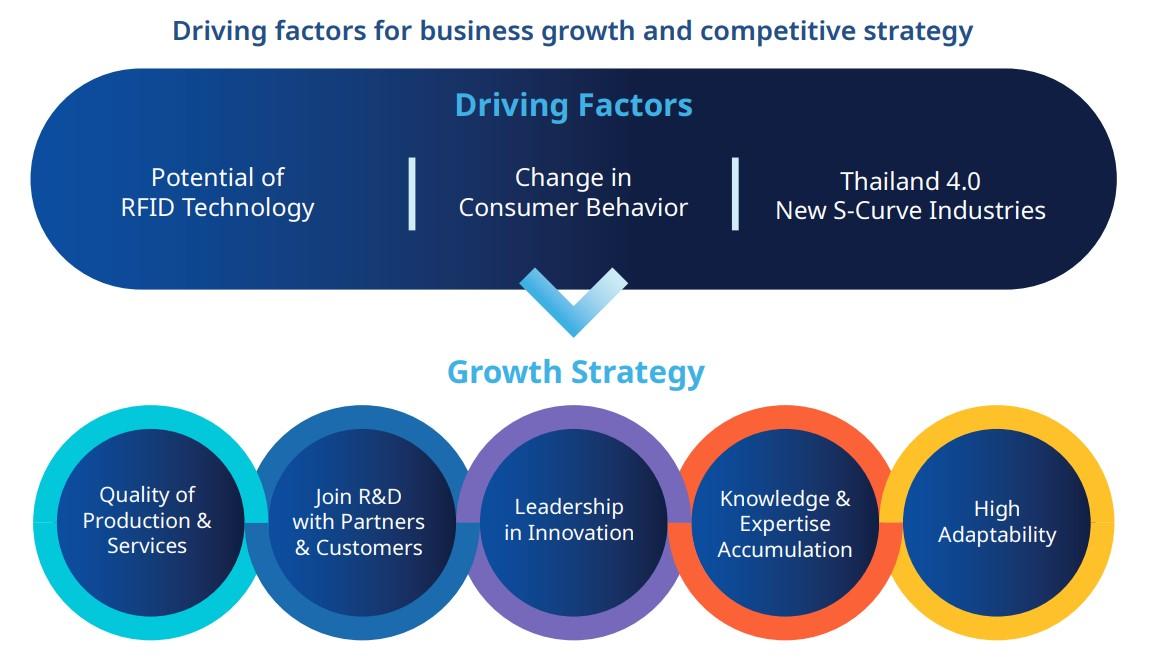
| Factors driving the Company’s business growth | Since the Company’s core business is in the research and development of microchips for RFID systems, it focuses on designing chips that can be tailored to meet specific customer requirements or Application Specification Integrated Circuits (ASICs). The Company also develops innovative products to offer to its customers. As a result, the Company’s products are unique and continue to grow, both from existing target business sectors and from new target business sectors. Furthermore, the Company sees business opportunities in developing chips with different bandwidths compared to the chips currently in use, to be applied in RFID systems. These chips will align with the growing Internet of Things (IoT) systems globally, such as in the transportation and healthcare sectors. Key factors that foster the growth of the Company are summarized in the following section.
RFID systems are a technology that uses radio frequency waves to identify the details of objects or their owners that have RFID tags attached. RFID technology has been developed from barcode systems but offers several advantages. Moreover, the technology related to RFID systems is continuously evolving, leading to a reduction in the cost of developing RFID devices while increasing their efficiency compared to barcode systems. Additionally, RFID systems can easily connect data to databases via cloud computing, making them more convenient to use. This has led to a growing trend of replacing barcode systems with RFID systems, both in large and small businesses. In addition to replacing barcode systems, RFID technology is now being applied in a variety of ways, depending on the specific objectives of use. Some examples include using RFID devices for security purposes, such as access cards or electronic backup keys for vehicles; increasing productivity and safety in the food industry, such as embedding small capsules in animals to record their history and for traceability (Food Safety and Traceability); applying RFID for production planning or quality control in manufacturing industries; using RFID for goods transportation or tracking the status of products and transport vehicles; and managing warehouse inventories in the logistics and transportation industries. Due to the versatility of RFID systems and their ability to be developed for use across various industries, the RFID market is expected to continue to grow alongside the expansion of these industries.
Originally, the idea of enhancing communication capabilities for devices or objects using RFID technology was primarily applied to improve business operations, such as in transportation systems, inventory management (tracking), or traceability in the livestock industry. However, in today's world, as consumers increasingly seek convenience, speed, and modern solutions for their daily lives, the concept of enabling communication between devices has shifted to focus on improving consumer convenience and speed in various activities. This trend is evident in the rise of the Internet of Things (IoT), which has grown rapidly and widely in recent years. The changing consumer behavior and the widespread adoption of IoT have become key drivers for the development of products that can communicate with one another using RFID systems, expanding beyond business management applications, as seen in the past. Due to the versatility of RFID systems, which can be designed and applied to a wide range of activities, RFID technology enables product and service owners to better respond to changing consumer behavior in an easy and convenient way. RFID can be used across various product and service categories, including linking payment systems to electronic payment machines in stores or mobile phones (E-payment), using smart labels to prevent product counterfeiting in businesses like bags or wine (Smart Labels), controlling the operation of amenities in vehicles or homes (Smart Home or Smart Car), and using devices to track patient data and location in healthcare (Smart Healthcare). As a result, RFID devices are expected to continue to grow, expanding into everyday consumer applications across various products and services.
Integrated circuit design (IC Design) is considered as one of the intelligent electronics industry which is in a high-potential existing industry group (First S-Curve) in accordance with the 20-year Thai Industrial 4.0 Development Strategy (2017- 2036). According to the strategic plan, the first S-Curve industry group is an industrial group with potential to create high economic and trade value. In addition, the intelligent electronic technology has been assigned a major role as technology and innovation group to drive traditional industries into value-added industry group. This group also becomes an important component in the development of the new high-potential industrial group (New S-Curve), which is a new industry group that relies a lot of technology and innovation as well. Therefore, both the public and private sectors have continuously given focus on developing knowledge about the RFID system through various agencies such as National Electronics and Computer Technology Center (NECTEC), Software Industry Promotion Agency (Public Organization) (SIPA), Thai Embedded System Association (TESA), RFID Institute of Thailand, GS1 Thailand, The Federation of Thai Industries, also including various academic institutions to develop and promote electronic knowledge in Thailand.
|
Material Changes & Developments
Material Changes & Developments
| Year | Description |
|---|---|
| 2,002 |
|
| 2,004 |
|
| 2,005 |
|
| 2,006 |
|
| 2,007 |
|
| 2,008 |
|
| 2,009 |
|
| 2,010 |
|
| 2,011 |
|
| 2,012 |
|
| 2,013 |
|
| 2,014 |
|
| 2,016 |
|
| 2,017 |
|
| 2,018 |
|
| 2,019 |
|
| 2,020 |
|
| 2,021 |
|
| 2,022 |
|
| 2,023 |
|
| 2,024 |
|
| 2,025 |
|
Use of Proceeds from Securities Offerings
Is There Money Raised from a Securities Offering Still to Report On?
No
Commitments Made in the Registration Statement
Are There Commitments or Conditions from an Offering or Listing?
No
Group Operating-Structure Policy
Description
The Company has a policy to invest in businesses that complement or create synergies with its core operations, or in businesses of a similar nature. Such investments are overseen through the appointment of the Company's representatives as directors or executives of those entities, in order to align strategic direction and operational policies and to prevent any duplication or conflict of business activities.
In addition, the Company has established a governance framework for its subsidiaries, associates, and joint ventures. This framework requires regular monitoring of operational performance and mandates that significant transactions, such as the acquisition or disposal of assets or connected transactions, obtain prior approval from the Executive Committee or the Board of Directors. These measures are designed to ensure that the operations of the Group are conducted with transparency and free from conflicts of interest.
Companies Where the Company Holds ≥10%
Companies (≥10% Holding)
| Company Name | Address | Province | Zip Code | Telephone | Business Type | Security Type | Shares | Paid-up Shares |
|---|---|---|---|---|---|---|---|---|
| Adaptrics Company Limited | 40 2rd FL., La Unique Plaza, Thetsabanrangsannua Rd., Ladyao, Chatuchak | Bangkok | 10900 | 02-716-6900 | Operate RFID Solution Development Service | Common shares | 1,200,000 | 1,200,000 |
Income Structure
Product / Service Income
| Category | Description | This Year | This Year % | Last Year | Last Year % | 2 Years Ago | 2 Years Ago % |
|---|---|---|---|---|---|---|---|
| Total revenue from operations | Total revenue from operations | 690,068.04 | 100 | 661,828.53 | 100 | 666,377.01 | 100 |
| Animal ID | 457,757.59 | 66.33 | 379,225.81 | 57.3 | 303,311.47 | 45.52 | |
| Immobilizer | 46,342.37 | 6.72 | 79,364.53 | 11.99 | 136,645.95 | 20.51 | |
| Industrial IoT | 183,075.88 | 26.53 | 200,534.98 | 30.3 | 211,035.37 | 31.67 | |
| NFC and Others | 2,892.2 | 0.42 | 2,703.21 | 0.41 | 15,384.22 | 2.31 | |
| Other | Other | 0 | 0 | 0 | 0 | 0 | 0 |
Export Income
| Category | Description | This Year | This Year % | Last Year | Last Year % | 2 Years Ago | 2 Years Ago % |
|---|---|---|---|---|---|---|---|
| Total revenue | Total revenue from operations | 690,068.04 | 100 | 661,828.53 | 100 | 666,377.01 | 100 |
| Domestic | Domestic | 4,616.31 | 0.67 | 3,651.26 | 0.55 | 5,329.97 | 0.8 |
| International | International | 685,451.73 | 99.33 | 658,177.27 | 99.45 | 661,047.04 | 99.2 |
Other Income
| Operating Other Income | Non-Operating Other Income | Share of Profit |
|---|---|---|
| 1710 · As of year: 2014.51 · Description: Total other income · As of yesteryear: 1181.84 · As of year before yesteryear: 2740.65 · 1711 · As of year: 2125.11 · Description: Other income from operations · As of yesteryear: 1466.93 · As of year before yesteryear: 2740.65 · 1008.28 · Description: Other income · As of yesteryear: 915.85 · As of year before yesteryear: 2349.04 · 1116.83 · Description: Finance income · As of yesteryear: 551.08 · As of year before yesteryear: 391.61 | 1712 · As of year: -110.59 · Description: Other income not from operations · As of yesteryear: -285.08 · As of year before yesteryear: 0.0 | 1713 · As of year: -110.59 · Description: Share of profit · As of yesteryear: -285.08 · As of year before yesteryear: 0.0 |
Product / Service Characteristics
Introduction
The Company's main products are integrated circuits (ICs) for radio frequency identification (RFID) systems. RFID systems consist of tags and readers that communicate data wirelessly. This technology allows for faster data transfer, increased data storage capacity, and enhanced data security. As a result, RFID systems can be used in various industries. Currently, the Company's products are divided into four main groups:
Business Type
3114
Business Groups
| Business Group | Description | ||||||||||||||||||||||||||||||
|---|---|---|---|---|---|---|---|---|---|---|---|---|---|---|---|---|---|---|---|---|---|---|---|---|---|---|---|---|---|---|---|
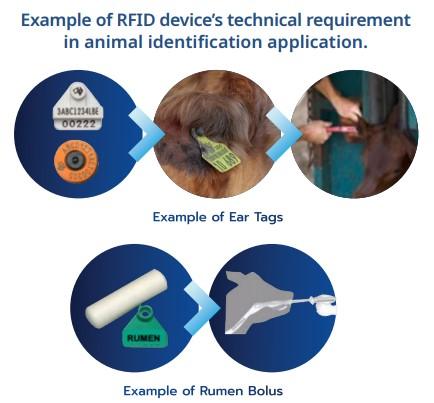
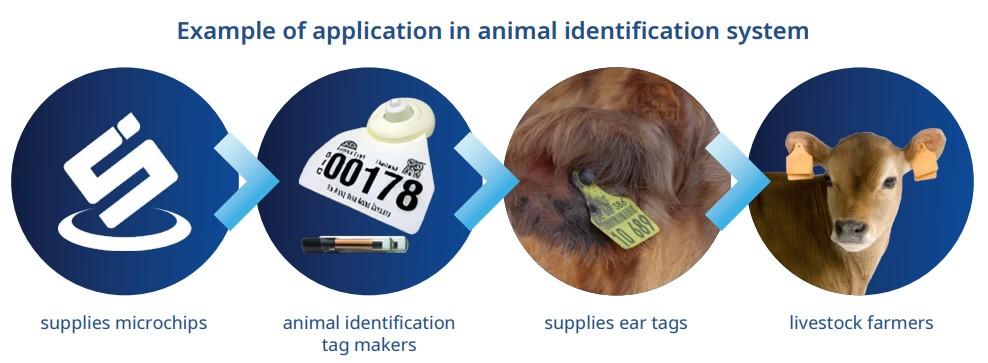
| Microchips for Tags in Animal Identification System (Animal Identification Tags) | Animal identification tags are one of the RFID applications that are used to record data of individual livestock such as beef cattle, dairy cattle, sheep as well as pets e.g. dogs and cats. In many countries that produce livestock and export livestock-derived products, for instance, Australia and nations in the South Africa region, there are laws and regulations in place that require livestock or animals to be tagged with microchips. Australia is one of such countries that demands tagging of all beef cattle and dairy cattle and it has also made progress in the enforcement of electronic identification tags for sheep and goats for the purpose of food traceability and safety. At present, the Company provides several models including plastic tags that can be fitted in animal’s ears or small glass cylinders suitable for implantation (for pets). These devices are capable of recording and reading individual animals’ data swiftly and accurately. Examples of digital data are species, feeding, vaccination, etc. In animal identification system, interrogator transmits radio signals continuously or periodically. When a tag with the microchip comes into close proximity of the interrogator, the tag receives the signal and activates internal circuits by means of electromagnetic wave induction which converts the wave into electricity. The tag utilises the generated electricity to transmit data back to the interrogator in radio waves. Once the interrogator receives the returned signal, it will analyse the data and relay commands and results to display on the interrogator’s built-in screen or a computer or store them in a database. As the system works automatically, users benefit from convenience, greater data accuracy, and reduced human errors which may come from manual data record as well as fewer sets of information that can be handled by human compared to the digitalised system. As the result, animal identification system enables data from the entire process to be recorded accurately and forms the basis for food traceability in livestock-derived product value chain.
Currently, the Company supplys tags which do not require batteries to operate (passive operation) and utilise radio signals in low frequency (LF) region according to ISO 11784, ISO11875, and ICAR (The International Committee of Animal Recording) standards. The Company’s customers incorporate the supplied microchips into finished products for selling to livestock business. The Company’s products’ advantages are greater communication range compared to competitors and product quality that satisfies minimum standards. A combination which allows us to offer outstanding product quality at costs that compete on a global market.
For the year 2025, the microchips for animal identification system generate revenues for the Company at 457.76 million Baht. | ||||||||||||||||||||||||||||||
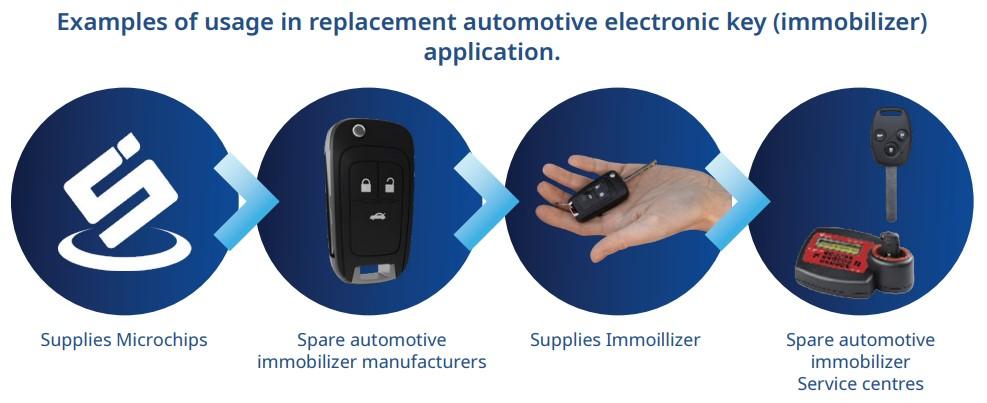
| Microchip for Automotive Electronic Systems (Immobilizer) | Automotive electronic key (or “electronic key”) is an RFID device that provides car security by encrypting and decrypting data transmitted between car and microchip. The system comprises of a code reader installed in the vehicle and chips which are embedded in a key fob. Automotive makers designate the Electronic Control Unit (ECU) which controls car’s electronic systems to communicate with RFID device and only allow car engine to operate upon receiving a valid authentication from the RFID reader. The engine will not start in a case of cloned key or by-passing ignition interlock (or “hot-wiring”). The immobilizer system is mandatory as standard or may provide the manufacturers certain manufacturing exemptions should the system is included with the car in many countries, for instance, European Union countries, Canada, and the United States.
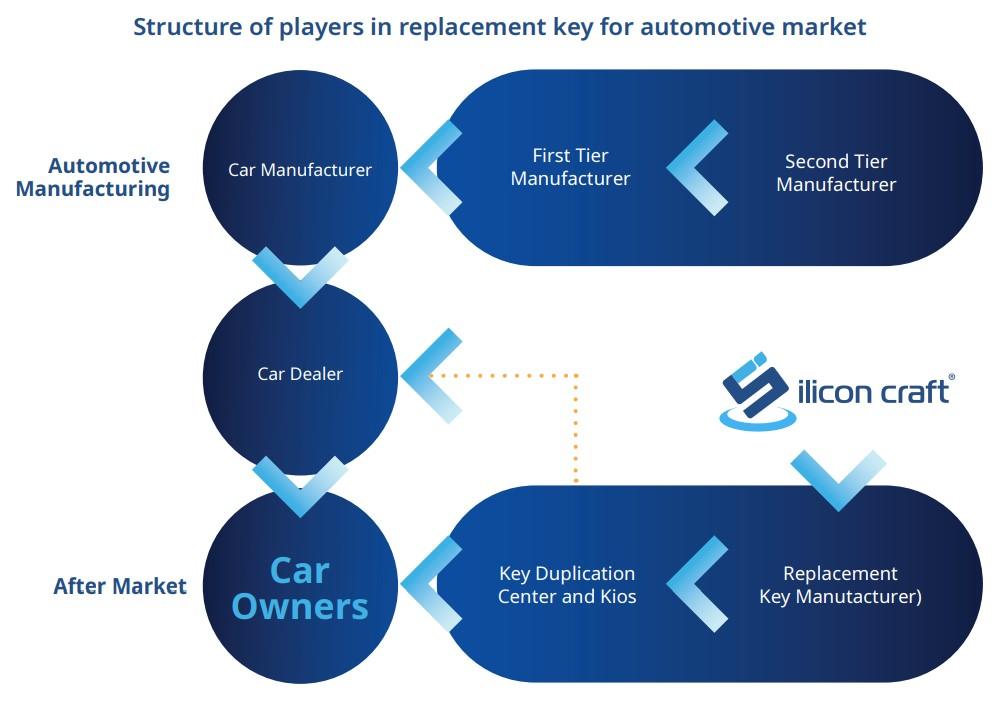
The Company is a leader in microchip R&D and has gained worldwide reputation from both automobile manufacturers and replacement electronic key manufacturers for providing microchips in various forms and form factors for the industry. Replacement electronic key is one of the After-Market businesses in automotive industry. The Company’s microchips for replacement electronic key utilize low frequency (LF) RFID technology which allows key fob to operate without additional power supplied by battery (Passive Tag). Additionally, some business partners entrust the Company to develop code reader device to decrypt codes from pilot electronic keys to fabricate replacement electronic keys. As the result, the Company can provide microchips for both replacement electronic key and code reader. The Company offers outstanding products for both quality and innovation. For example, the Ultimate X (ULTX) products with universal replacement keys cover 99% of the car models in the market. This then eliminates the need for multiple replacement keys among the providers. So, it’s considered as an added convenience to enable customers for better management of their inventory.
For the year 2025, the Company’s revenue from microchip for automotive immobilizer key system accounted for 46.34 million Baht. | ||||||||||||||||||||||||||||||
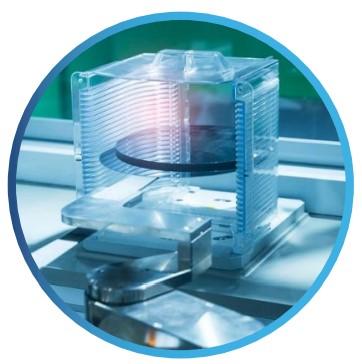
| Microchips for Industrial IoT Systems (Industrial IoT) | These are RFID technology microchips applied in industrial processes. For example, RFID system devices used for access control, consisting of cards for carrying and readers installed at various entry points. The reader reads data from the card to record information about entry and exit and it can be linked to a security system, unlocking doors only when receiving a confirmed identity command. Another application is in Factory Automation systems, where RFID tags are placed on products, and readers are installed at each station in the production line. The reader reads the tag's information, processes it through various systems, allowing manufacturers to automatically search, track, and obtain detailed information about each product. For instance, the product SIC73F1 has an RFID tag in the packaging box, a crucial component of the microchip and a high-value raw material. This product aids in automatically tracking information about the wafer sheets in the manufacturing process, enhancing security and reducing errors caused by human intervention in the production process. Additionally, RFID systems are used in Waste Bin Management, with RFID tags on bins and readers on waste collection vehicles. The reader reads information on the tag to automatically determine the type and weight of the waste in the bin, facilitating efficient waste management. Furthermore, RFID technology is applied in various other purposes, such as Smart Toys and Educational Toys, connecting toys to display screens for interactive engagement with the players. Example of usage in access control and in factory automation systems
The Company is a developer of microchips for industrial IoT system of low frequency (LF) to be used in the cards with an access system and tags of industrial factories. Also, high frequency (HF) microchips are developed for readers attached to various locations of the access system. Meanwhile, others frequency microchips are still in development process for future use in other systems. For the year 2025, the microchips for Industrial IoT generate revenues for the Company at 183.08 million Baht. | ||||||||||||||||||||||||||||||
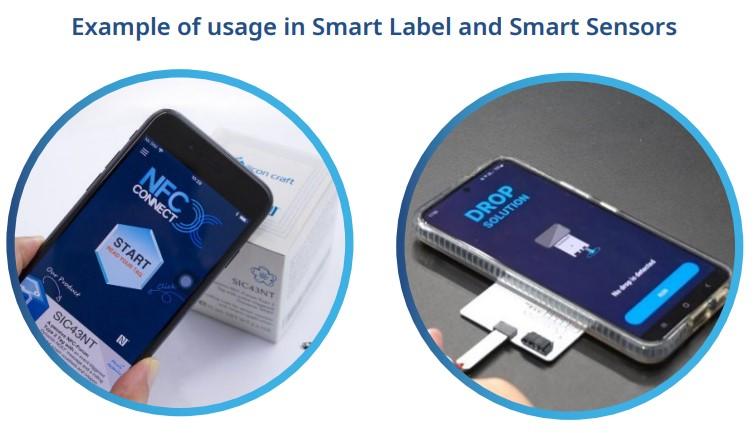
| Microchips for NFC and Others | Microchips for Near Field Communication (NFC) systems, a short-range wireless communication system that can be used in conjunction with smartphones or newer mobile phones. The company develops microchips for NFC systems to be utilized in various industries. For example, they can be used for smart labels to prevent product counterfeiting (Anti-counterfeiting) with the ability to detect tampering or destruction (Tamper Detection) and unique encoding. They can also be connected to various types of sensors (Smart Sensor) to make measurements and readings of various components more convenient and rapid. This enables readings to be obtained through mobile phones, allowing the development of various preliminary analysis devices. For instance, detecting suspended solids in water or measuring blood sugar levels without the need for batteries. Additionally, the company generates revenue by designing and manufacturing products, offering services, and selling various related equipment, providing additional services to customers such as selling study kits, testers, and form factor devices.
For the year 2025, the Company recognized revenues from NFC & Others group at 2.89 million Baht. Summary Table of Company Products
|

Research & Development
Has R&D Policy (Y/N)
Yes
R&D Cost — Description
Over the past three years, the Company has steadily increased its investment in research and development (R&D). R&D expenditure was THB 109.30 million (16.4% of revenue) in 2023, THB 109.33 million (16.5% of revenue) in 2024, and THB 121.85 million (17.7% of revenue) in 2025. This reflects the Company's commitment to technology and innovation as a foundation for maintaining competitiveness in the semiconductor industry. The Company believes that sustained R&D investment is a key driver for strengthening its technological capabilities and creating new opportunities for business and revenue growth.
In FY2025, the Company launched six new products, comprising three Animal ID products, two Industrial IoT products, and one NFC product. This marks a notable increase from the historical average of one to two new product launches per year, demonstrating that the Company's R&D investments are delivering tangible results in accelerating product development and bringing new technologies to market.
Looking ahead, the Company remains committed to ongoing R&D investment to support long-term growth, improve profitability, and build sustainable competitive advantage. Building on the momentum achieved in 2025, the Company targets the launch of at least five new products per year to keep pace with evolving market demand and technological change.
Promoting Creativity and Innovation
Innovation is considered a crucial foundation for the Company’s business, reflecting the organization’s vision, mission, values, and strategy. Fostering an innovative culture within the organization is of utmost importance, enabling employees to apply their knowledge and skills to develop new products or improve internal processes. Therefore, the Company supports open communication and encourages employees to freely express their opinions. Management accessibility and activities such as Town Hall meetings are implemented to facilitate communication. Additionally, the Company has policies to encourage patent applications to protect knowledge, providing rewards for patent holders.
Image of rewards for patent inventors
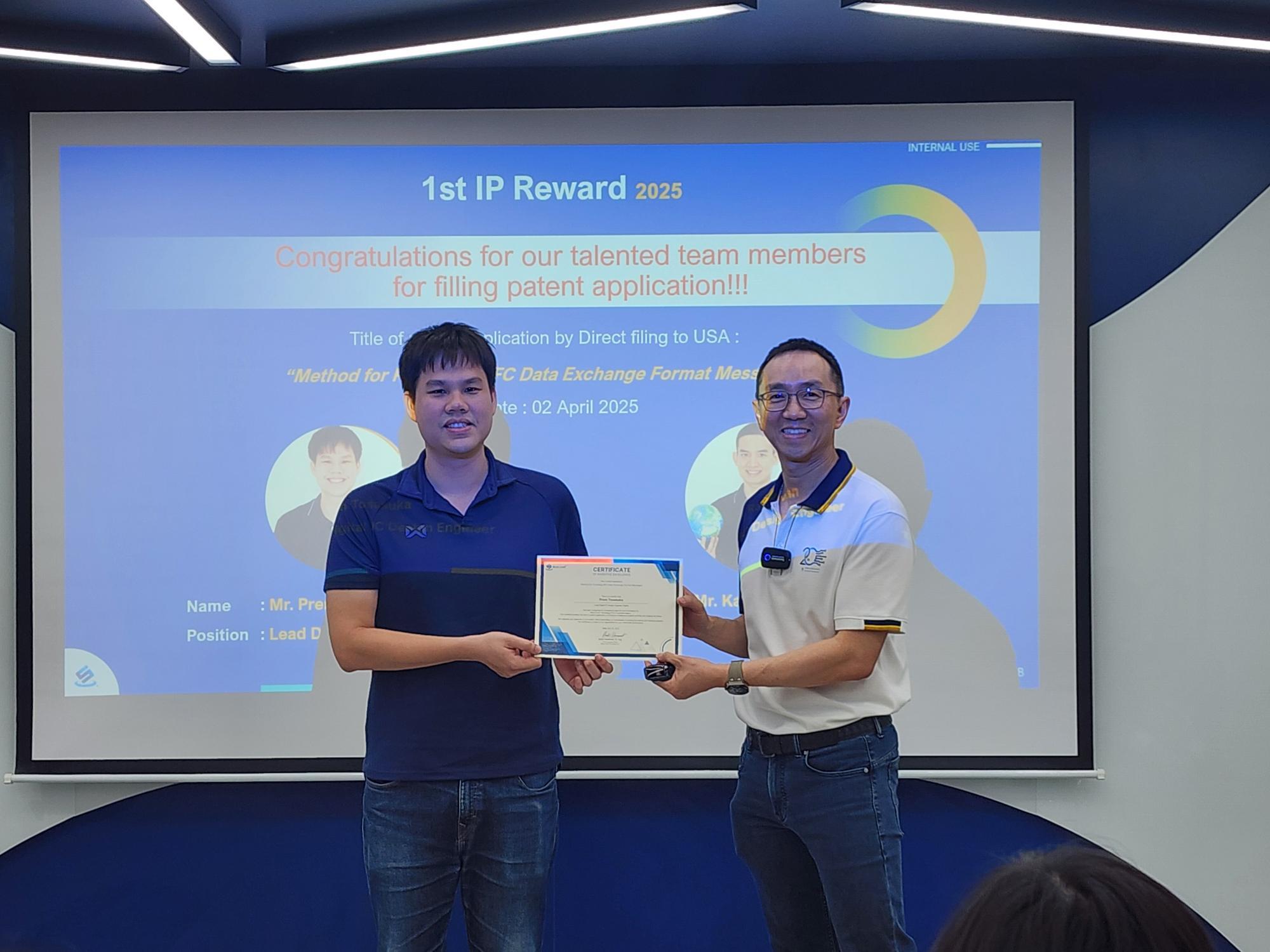
While the patent policy may not currently lead to research results being developed into products for sale, the knowledge gained serves as a critical foundation for future commercial applications. This enables the Company to introduce new products that meet customer needs, explore continuous market opportunities, and adapt swiftly to rapidly changing environments.
Product Development Projects
As of December 31, 2025, the Company has 27 ongoing product development projects, contributing to overall business growth, which 11 projects were accomplished have been amortized. The other 16 projects are under progress. The direction of product development projects focuses on technological advancements to address future trends.
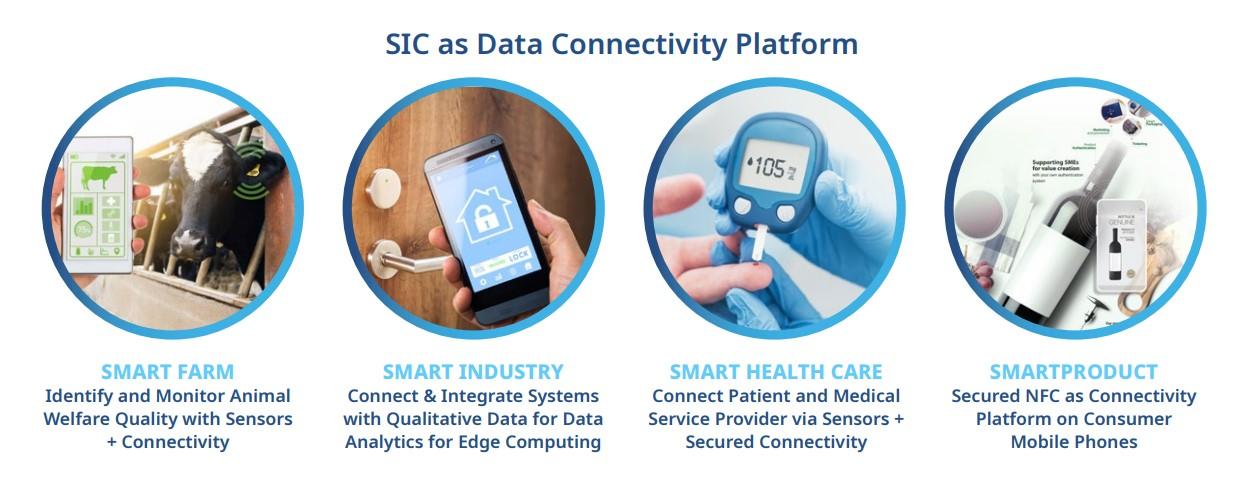
Smart Farm | The Company is dedicated to researching and developing products to elevate Animal ID solutions to Animal Healthcare. This involves providing farm managers with more comprehensive information beyond basic animal identification, allowing them to monitor the health of animals through sensor measurements. This data empowers farm owners to manage and make decisions more efficiently, leading to improvements in farm management systems. The project’s outcomes can also be applied to general animal health tracking, including laboratory experiments. |
Smart Industry | In response to Industry 4.0 demands, the Company is researching and developing products that expand the scope of communication frequencies for various applications. This includes checking large quantities of products in industrial settings or integrating into automated processes in various related industries. Increasing connectivity between individuals, data, and machinery enhances data analysis convenience and improves overall management efficiency, ultimately reducing human errors. |
Smart Health Care | The company aims to make medical devices and services more easily accessible. Therefore, it is dedicated to researching and developing products that connect measurement and reading of various components more conveniently, rapidly, and user-friendly. The goal is to develop products that can be transformed into preliminary analysis devices through secure connections, supporting remote medical activities (Telemedicine) for diagnosis and healthcare (Diagnostic, Wellness, and Healthcare). This will be achieved through a testing platform at the point of care on mobile devices (Mobile Point of Care Testing or POCT). It can effectively respond to the aging population trends, both nationally and globally, allowing quick and convenient access to services. |
Smart Product | The Company is committed to researching and developing products to enhance the safety and connectivity between users and various products. This is achieved through the development of high-level encryption NFC technology for product identification. This technology plays a role in preventing product counterfeiting and adds value to various products and services. |
Investment projects to support future research and development
Due to the Company’s nature of business, it requires continuous research and development to offer new products to customers on a regular basis. Thus, in a bid to support future research and development, the Company has investment plans as follows:
1) Investment in the tools, equipment, and software of microchip design and testing
In the process of chip design, one important step is to review the layout of chip components and simulation through a software program for errors, as well as verifying and revising the work to ensure that the designed circuit structure and its parts can be used in practice with efficient performance before development into a prototype chip. Then, there is a test to work with other devices because the chip must be used in actual work with other components. A full system simulation must be performed by using the processing software for results of performance in various specified situations. At present, the Company invests in the leading microchip design software programs of international reliability for its workflow process. In addition, the Company has invested in testing equipment to support new technological development and increase number of engineers according to its business expansion, such as other frequency measurement accessories for more comprehensive testing, electrical signal meter, equipment for signal measurement directly from wafer level, and testing equipment.
2) Investment or joint investment in other company engaging in integrated circuit design and development or having innovation which can support the Company’s business operations.
Apart from additional investment in tools, equipment, software and patent, the Company also has other mean to build up growth of its business by investment or joint investment in other company that can support the Company’s business operations. Criteria that the Company will be used to consider to invest with such prospect company, if it:
Operates business in integrated circuit design and development; or
Has innovation which can support the Company’s business operations; or
Own the patent or intellectual property or software that the Company can jointly use with; or
Has personnel who have skill and expertise in the branch relevant to the integrated circuit design.
In addition, such company must not have record for infringement of intellectual property, or its key personnel has record for infringement of intellectual property.
R&D Cost — Label
Research and development (R&D) expenses over the past 3 years (Million Baht)
R&D Cost — This Year
121.85
R&D Cost — Last Year
109.33
R&D Cost — 2 Years Ago
109.3
Assets Used in the Business
Permanent Assets — Description
As of December 31, 2025, net value of assets that the Company used in business operation after deduction of accumulated depreciation is 27.61 million Baht, with details as follows:
(Unit : Million Baht)
Permanent Assets — Appraisal
| Asset | Ownership | Obligation | Appraisal Value |
|---|---|---|---|
| Leasehold building improvement | Lease and own | Nil | 4.96 |
| Office equipment | Own | Nil | 1.87 |
| Office furniture and fixtures | Own | Nil | 1.63 |
| Tools and equipment | Own | Nil | 19.15 |
| Asset under installation | Own | Nil | 0 |
Intangible Assets — Description
As of December 31, 2025, value of the Company’s intangible assets were 230.91 million Baht which included computer software and 27 product design and development projects. 11 projects has been completed and amortized and 16 projects are under development.
(Unit : Million Baht)
Intangible Assets — Appraisal
| Asset | Type | Type (if Other) | Appraisal Value |
|---|---|---|---|
| Computer software - net | Software | 3.72 | |
| Product development projects | Others | Product design and development projects | 227.19 |
Has Subsidiaries Investment Policy (Y/N)
Yes
Subsidiaries Investment Policy — Description
For investment policy in subsidiaries, associated companies or joint ventures, the Company considers for investment in a business or an industry with maximum support and benefits to its operations, potential growth, capacity and expertise towards a goal to acquire technology, distribution channels or lower risks which may occur in the value chain. Moreover, the Company focuses on the rate of return and its sustainable growth. In case of an investment in subsidiaries, the Company provides its supervision by sending representatives as directors in those subsidiaries according to the proportion of their shareholding. For subsidiaries with business operations significantly affecting the Company, there must be the authorized approval for various issues by the Executive Committee or the Board of Directors before making any transactions. Besides, the representatives appointed by the Company must ensure that the subsidiaries have policies for associated transactions, acquisition or disposal of assets or any other important transactions of the Company with accuracy and comprehensiveness. This also includes the application of criteria related to disclosure of information in the same manner as the Company, including the supervision on information storage and accounting records of those subsidiaries, so that the Company can verify and obtain in preparation for consolidated financial statements on time. In part of associated companies and joint ventures, the Company does not have much involvement and supervision. Only the Company’s representatives are appointed as directors in those companies. Also, the number of representatives to serve as directors depends on the proportion of shareholding. For joint ventures, the appointment of representatives for supervision and management is based on the agreement between the parties.
This Investment Policy and Guidelines for Supervision of Subsidiaries, Associated Companies or Joint Ventures was initially approved at the Board of Directors Meeting No. 2/2017 held on April 3, 2017. It was most recently reviewed and approved at the Board of Directors Meeting No. 4/2025 held on July 17, 2025.
Marketing Policy & Competition
Reporting Mode
3117
Marketing Policy (Overall)
Product Presentation and Distribution Channels
The Company’s main objective is to offer products and services through its network, both directly and indirectly. This includes direct product sales, sales through distributors, and sales through agents. The Company focuses on building trust with customers and fostering long-term relationships by working closely with them to develop products that meet their needs more effectively. The Company’s Sales & Business Development Devision is responsible for contacting customers and presenting the company’s products, while the Embedded System and Engineering Support Department provides product and service information to support sales and customer service. Channels and protocols for customer engagement are detailed as follow.
Direct Sale
Since the Company’s products are those which require specialized knowledge and expertise, the Company therefore uses a method of creates brand awareness to its products and services through event marketing and participating in exhibitions related to RFID technology worldwide. In 2025, the Company participated in two exhibitions, namely SEMICON Southeast Asia 2025 in Singapore and Wireless IoT Tomorrow 2025 at the RheinMain Congress Center (RMCC) in Wiesbaden, Germany, to promote its products and services. while sending a team to present the products and services, including the Company’s past works for various target customers to be known among target customers in different countries. The Company also allows customers to consider products and services, as well as the Company’s qualifications, to be included in the vendor list of each customer. In case customers need services or wish to order products from the Company, they can contact the sales department for additional products and services to negotiate the terms and conditions.
Since the easing of the COVID-19 pandemic situation, the Company has adapted its activities from online to a hybrid approach, combining online and offline activities. This includes traveling to meet with key customers and partners both domestically and internationally to strengthen relationships and explore new business opportunities continuously.
Distributors Channel or Agent Channel
The Company collaborates with distributors in various regions of target countries to market its products and offer services through distributors who are well-versed and familiar with the target customers in each country. The distributors purchase products from the Company and sell them to target customers in each region, while also providing marketing information to help identify growth opportunities for the Company. In addition, the Company also utilizes agents to offer products. These agents receive compensation in the form of commission fees based on the sales volume of each customer order. Having business partners as distributors and agents allows the Company to gain valuable insights into technology trends and customer demand. Furthermore, it helps the Company access key customer groups that prefer to work with agents or have previous transactions with them, enhancing the Company's reach and market presence.
Customer Profiles and Target Customer Groups
Animal Identification Tag Manufacturers Group
Animal identification tag manufacturer group represented approximately 66.3% of the Company's total revenue in 2025. These customers purchased the Company's microchips and installed them in identification tags made by themselves. They then marketed the assembled animal identification products under their brand names to various end-users, for instance, farm owners and livestock breeders.
Replacement Car Key Manufacturers Group
Replacement car key manufacturers group accounted for 6.7% of the Company's total revenue in 2025. This group of customers are some of the largest replacement immobilizer manufacturers that purchased our microchips and assembled them into their key blanks. Afterwards, they distributed replacement car keys as finished goods to replacement car key service centers across the globe. A large portion of products was shipped to European countries and the United States, where laws and regulations on automobile safety were first adopted and enforced.
Industrial IoT Customer Group
In 2025, Industrial IoT customer groups accounted for 26.5% of the Company's total revenue. These customers purchased and directly distributed the Company's products to manufacturers or end-users in various industries. Due to the versatility of products in this group, the Company has a broad customers based from many industry sectors.
Customer Group for NFC Products and Others: Innovative product development businesses
NFC and other products were marketed to the product innovation customer group. The sales represented approximately 0.4% of the Company's total revenue in 2025. These customers are innovative product development businesses seeking to add value to their products, protect them, and enhance security. Examples include businesses related to Luxury Brands, where products in the Smart Packaging or Anti-Counterfeiting categories effectively address their needs. The Company also develops products in the Digital Healthcare Sensor category to meet the increasing consumer interest in health.
Industry & Competition (Overall)
Global Semiconductor Industry Overview and Outlook
The semiconductor industry serves as a critical foundation of the global digital economy. Semiconductors are essential components in modern technology, powering end products across a wide range of industries, including communications, automotive, automation, and artificial intelligence (AI). Growing demand from these sectors continues to drive expansion in global semiconductor consumption, both in volume and sophistication. As a result, many countries have placed greater strategic priority on strengthening domestic supply chain resilience to secure long-term economic advantages.
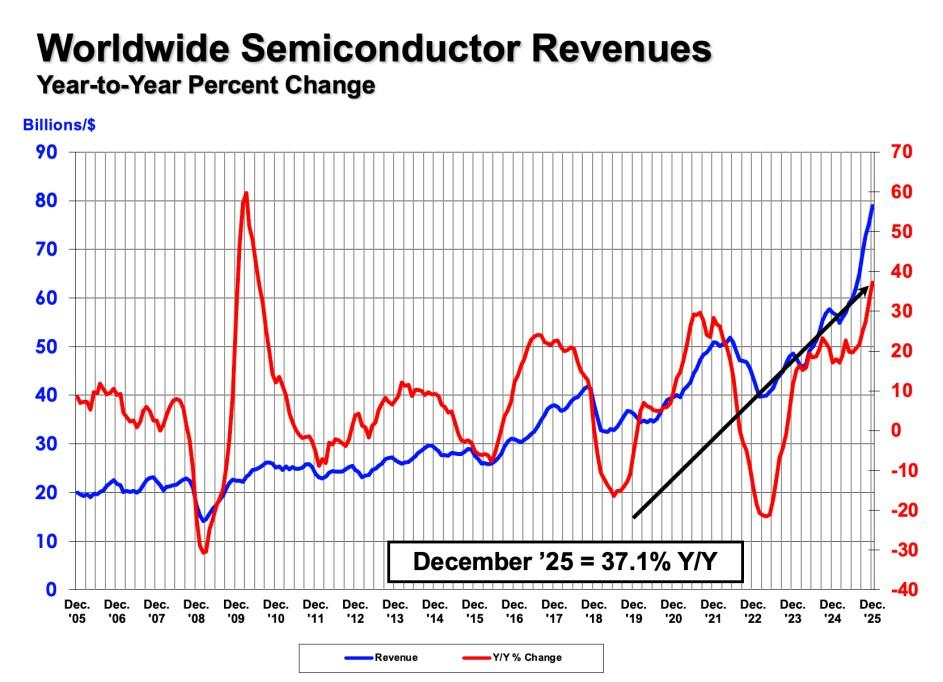
In FY2025, the Semiconductor Industry Association (SIA) reported that global semiconductor sales reached USD 791.7 billion, a record high representing a 25.6% increase from the prior year. In Q4 FY2025 alone, sales totaled USD 236.6 billion, up 37.1% year-on-year. The strongest-performing product categories were Logic and Memory, which grew 39.9% and 34.8%, respectively, driven by robust demand for AI computing and expanding digital infrastructure. By region, Asia Pacific and the Americas recorded the highest growth at 45.0% and 30.5%, respectively, while Europe grew at a more modest 6.3% and Japan contracted by 4.7%.
Looking ahead, SIA projects that global semiconductor sales will surpass USD 1 trillion for the first time in FY2026. Emerging technologies such as AI, IoT, 6G, and autonomous driving systems are expected to continue driving strong chip demand in the years ahead.
Source: Semiconductor Industry Association
Overview of Thailand's Semiconductor Industry Structure
The electronics industry is one of the key sectors within the semiconductor supply chain and has played a vital role in Thailand's economy since 1972. The Thai government has consistently supported investment in this sector through the Board of Investment (BOI), offering a range of tax and non-tax incentives such as exemptions on import duties for machinery and raw materials used in export production. These measures have attracted a significant number of foreign investors to establish electronics manufacturing bases in Thailand, drawn by the country's competitive labor costs, favorable tax benefits, and strategic location as a hub of the ASEAN region. As a result, Thailand's electronics industry has experienced rapid and sustained growth over the years.
Thailand's electronics industry is primarily export-oriented, with exports accounting for 90 to 95% of total production. The country ranks as the 14th largest electronics manufacturing base in the world as of 2024. Key export products include integrated circuits (ICs) and hard disk drives (HDDs), with major export destinations comprising the United States, Europe, ASEAN countries, Hong Kong, China, and Japan.
The Thai government has continued to actively promote investment in the electronics sector. Since 2016, electronics has been designated as one of the targeted S-Curve industries under the Thailand 4.0 policy. From 2021 onwards, BOI further elevated the sector to "strategic industry" status, offering enhanced tax incentives to attract investment in advanced smart electronics that leverage high-level technology.
Structure of Thailand's Electronics Industry
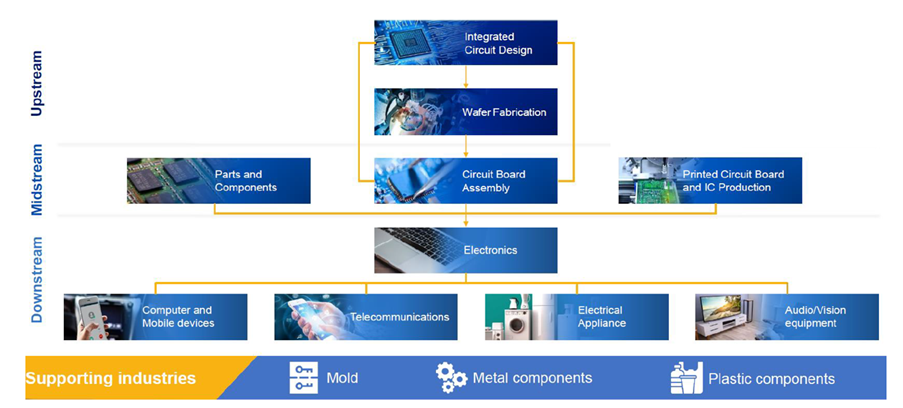
Source: BOI, Thailand’s Electronics Industry Supply Chain
Thailand's electronics industry is primarily focused on the manufacture of components and parts, positioning it within the midstream and downstream segments of the semiconductor value chain. The Company's core business, however, falls within the upstream segment, which is recognized as a future-oriented industry under Thailand's Industry 4.0 strategic development plan and is a key priority of the National Semiconductor and Advanced Electronics Board in its efforts to elevate and strengthen the country's industrial competitiveness. The Company is the only Thai private sector operator with a dedicated team of specialists conducting continuous research and development of RFID microchips. Its products are internationally recognized and exported to leading RFID product manufacturers worldwide. Thailand's manufacturing base currently lacks upstream wafer fabrication capability due to constraints in capital investment and specialized talent, leaving the country dependent on imported raw materials and production technology. As an export-driven industry, Thailand's electronics sector is also highly sensitive to global economic volatility and the pace of technological advancement, both of which are key factors shaping its direction.
In FY2025, Thailand marked several important milestones in semiconductor development. The National Semiconductor Training Centers (NSTCs) were officially launched at King Mongkut's University of Technology North Bangkok, and the Thai Semiconductor Industry Association (THSIA) was established under the support of the Ministry of Higher Education, Science, Research and Innovation (MHESI) to bring together industry experts and coordinate national strategy. THSIA also signed memoranda of understanding on semiconductor cooperation with four leading ASEAN industry associations at the ASEMIS 2025 summit, marking a significant step in elevating Thailand's role in the global semiconductor value chain. In early FY2026, BOI announced a new promotion policy for the semiconductor and advanced electronics industry, with a focus on supporting Analog and Sensor microchip design through tax incentives, R&D support, and workforce development initiatives. This policy is a positive enabler for the Company's long-term competitiveness and growth, offering benefits in the form of reduced operating costs, access to a higher-quality talent pool, and expanded market opportunities across the Asia Pacific region, which remains one of the highest-growth markets globally.
Integrated Circuits Supply Chain of Thailand
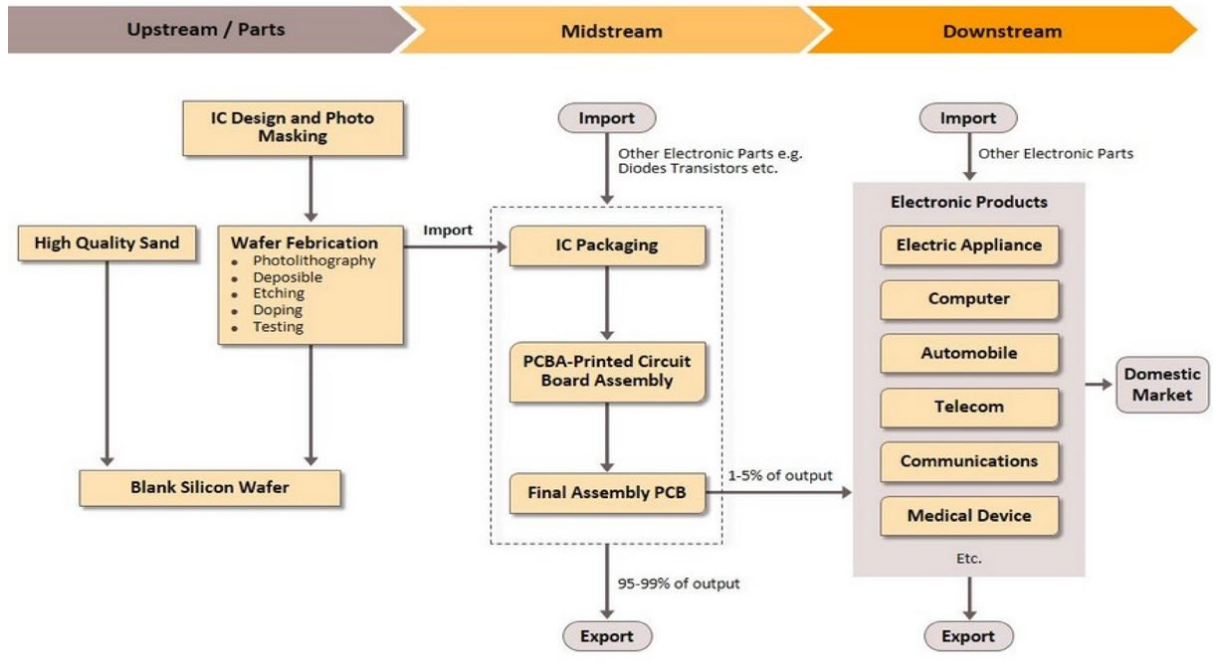
Source: Thai Electrical and Electronics Institute (2017)
Global Overview of RFID Systems and Devices
Radio Frequency Identification (RFID) technology uses radio waves to read and record data from objects through a device known as a tag or transponder. RFID was developed to complement and replace traditional barcode systems, offering several key advantages: the ability to read multiple items simultaneously even while objects are in motion, high data storage capacity, rewritable memory, and strong security through encryption that is difficult to counterfeit. Today, RFID technology is deployed in more than 120 countries across a wide range of industries, including retail, logistics, automotive, healthcare, and public transportation.
The global RFID technology market is expected to grow steadily, with a projected compound annual growth rate (CAGR) of approximately 8.5% from 2025 to 2034. This growth reflects the broader shift toward digitalization, as businesses increasingly prioritize data accuracy and real-time tracking. The trend aligns with the continued expansion of the semiconductor industry, particularly in Logic and Memory products driven by AI and cloud infrastructure demand, which serve as the core processing backbone for RFID data. Sensors and Analog components, which are key elements of RFID chips and readers, also continue to show positive growth momentum.
The key drivers of RFID market growth are as follows. First, rising demand for supply chain transparency, particularly in retail and logistics, where RFID is being adopted to address inventory discrepancies and support the growing complexity of omnichannel operations. Second, government support measures and new international regulations, including the emerging concept of item-level tracking, which is expected to become an important standard in the near future. Third, the expansion of contactless payment systems, fueled by the global shift toward cashless societies and the rollout of smart public transportation networks across multiple countries.
The industry is moving toward a data-driven future in which RFID is expected to evolve beyond simple data identification into a source of edge intelligence for artificial intelligence applications. RFID will increasingly be integrated with AI systems as a reliable field-level data source, enables advanced analytics and consumer behavior forecasting, alongside the development of higher-performance, application-specific chips and tags at more cost-efficient levels. The Asia-Pacific region, including Thailand, remains a high-growth market, supported by the continued expansion of the semiconductor industry, presenting a strategic opportunity for the Company to leverage its expertise in application-specific microchip design to differentiate itself globally, deliver value-added solutions, and strengthen long-term competitiveness and sustainable growth.
Business Overview and Outlook by Product Segment
The Company's core business focuses on the design and development of microchips for passive tags and reader devices, both of which represent product categories with substantial total market value and significant growth potential. The Company's primary target customer segments are Animal ID systems, Automotive Immobilizer systems, Industrial IoT systems, and NFC and Sensor applications. The overview and growth outlook for each business segment are as follows:
1) Overview and Trends of the Animal Registration System Business
Consumers are placing greater importance on the quality, safety, and origin of food, prompting the livestock industry to continuously raise its production standards and farm management practices, particularly in the areas of traceability and biosecurity. These factors are essential to building confidence throughout the food supply chain. At the same time, the growing trend of pet humanization, where pets are treated as members of the family, has led many countries to introduce mandatory microchip registration laws for pets to confirm ownership, prevent loss, and promote animal welfare.
Australia, one of the Company's key customers, is among the world's leading producers and exporters of beef, lamb, and related products. The country places strong emphasis on food traceability after processing. The Australian government has approved mandatory electronic tagging requirements for all sheep and goats nationwide to prevent disease and strengthen biosecurity, beginning with newborn animals and those being transported. The growth in the number of newborn cattle and sheep in Australia therefore serves as a direct positive driver for the Company's product demand.
Australia's success with its animal registration system has also become a model for other countries, including Canada, New Zealand, and the United States, which have begun developing and promoting RFID-based animal identification systems. These markets have started with voluntary adoption programs, with mandatory requirements already in effect in certain states for specific animal categories. In FY2025, Argentina introduced mandatory electronic identification for cattle, buffalo, and deer, accompanied by financial support for operators. Brazil also announced its National Individual Bovine Identification Program (PNIB), a plan to transition cattle and buffalo tracking from herd-level to individual-level identification between 2025 and 2032, with electronic devices designated as one of the primary identification methods. These policy developments serve as important drivers of continued growth in the Animal ID microchip market.
Looking ahead, TechSci Research, an international market research firm with coverage across more than 80 countries, projects that the animal identification market will grow at a CAGR of 9.11% through 2030, driven primarily by food safety requirements, disease management needs, and the continued rise of pet humanization.
2) Overview and Trends of the Automotive Immobilizer System Business
Immobilizer technology, which embeds a microchip within a vehicle key, has been used to enhance automotive security since the 1990s. The system evolved from traditional physical key matching to radio frequency (RFID) authentication between the microchip in the key and a reader installed in the vehicle, and has since been further advanced through cryptographic encryption to increase security complexity.
As vehicle key technology has grown more sophisticated, producing spare keys has become increasingly difficult and costly for consumers. Those who need a replacement or additional key are typically required to go through an authorized dealer, a process that is often time-consuming and expensive. The automotive spare key business therefore emerged as a practical alternative for vehicle owners who prefer not to use dealer services, and as a convenient solution for dealers who wish to outsource key duplication to specialized Key Duplication Centers and Kiosks.
Several countries, including Germany, Austria, and Canada, have enacted legislation requiring all vehicles to be fitted with an immobilizer system. In the United States, regulations incentivize immobilizer adoption by imposing more complex parts registration requirements on manufacturers that do not install the system in their vehicles.
Demand for automotive spare electronic keys is typically driven by vehicle replacement or key loss. As a result, the primary customer base for the Immobilizer market is the used vehicle segment, which has been growing in popularity. This is consistent with data from PwC indicating that new vehicle prices in the United States and Europe have risen by an average of 15 to 25% since 2020, with average transaction prices exceeding USD 45,000, prompting more consumers to consider used vehicles. The semiconductor shortage in recent years further constrained new vehicle production capacity, providing an additional near- to medium-term boost to the used vehicle market.
3) Overview and Trends of the Industrial IoT Business
Technology continues to play an increasingly important role in industrial processes. The connectivity between machines, people, and operational systems through Internet of Things (IoT) technology enhances safety management and overall operational efficiency. Products in this segment are widely adopted across various applications, including access control systems that use contactless cards and readers for security purposes, industrial readers for tracking goods along production lines, and inventory verification systems in warehouses. These applications are key enablers of the transition toward Industry 4.0.
The Industrial IoT market is expected to sustain long-term growth, driven primarily by the expansion of Smart Factories and the rollout of 5G infrastructure, which supports large-scale simultaneous device connectivity. The manufacturing and logistics sectors have the highest rates of IoT adoption. RFID technology serves as a critical component of industrial IoT systems, enabling seamless data communication between connected devices and supporting real-time asset tracking, monitoring, and management. This connectivity improves inventory management efficiency, reduces production losses, and enhances supply chain transparency. The retail and logistics sectors currently represent the broadest adopters of RFID technology.
Geographically, the Asia Pacific region remains the fastest-growing market, driven by government Smart Factory promotion policies, rising labor costs accelerating automation adoption, and the expansion of 5G and cellular IoT networks at an industrial scale. This trend aligns with the growth trajectory of the markets in which the Company operates and represents a significant opportunity for the Company to develop industrial solutions that capture this expanding demand.
4) Overview and Trends of the NFC and Sensor Business
Near Field Communication (NFC) is a short-range wireless communication technology that enables secure data exchange within a distance of approximately 4 to 5 centimeters. It is widely used in contactless payment systems, Digital ID, Smart Cards, Smart Packaging, and anti-counterfeiting applications. Today, over 95% of contactless payment transactions worldwide are powered by NFC technology. NFC also plays an important role in IoT systems, enabling fast and secure connectivity and data exchange between devices with a single tap, spanning applications from Smart Home systems and industrial automation to asset tracking.
Looking ahead, NFC is expected to continue growing as a digital infrastructure for identity verification and contactless interaction. A key driver of this growth is the development of NFC Secure Element, a dedicated chip or isolated memory area within a device that stores highly sensitive data such as payment card information, digital keys, and identity credentials, inaccessible to other applications on the same device. This enables NFC transactions to meet the security standards of financial and enterprise-grade infrastructure. Applications of NFC Secure Element range from mobile payment systems and digital national ID cards to e-Passports, access control systems, and digital vehicle keys, all of which align with the long-term expansion of the Digital ID market and enterprise security systems.
The Sensor segment is a foundational component of modern electronics, detecting and converting physical data such as temperature, pressure, motion, light, and biological signals into digital information. Sensors serve as the primary data source for both AI and IoT systems. Growth in the smart sensor market is driven by several reinforcing factors. The first is the expansion of Industry 4.0 and Smart Factories, which drives manufacturing adoption of sensors for real-time machine condition monitoring and process control. The second is the growth of intelligent vehicles and Advanced Driver Assistance Systems (ADAS), which rely on multiple sensor types simultaneously, including cameras, radar, and LiDAR, to detect the surrounding environment in real time and support safety functions. The third is the increasing use of sensors in remote healthcare monitoring, a trend that has accelerated significantly following the COVID-19 pandemic.
Sources:
WSTS (World Semiconductor Trade Statistics) Spring 2025 Semiconductor Market Forecast
MarketsandMarkets: RFID Market - Global Forecast to 2034
Euro-Security: RFID market poised for strong growth – market volume expected to more than double by 2034
IDTechEx: RFID 2026-2036: Forecasts, Players and Opportunities
Techsciresearch: Animal-identification-market
Board of Investment Thailand (BOI)
Krungsriresearch: Electronics Industry Outlook 2026-2028
Procurement of Products & Services
Reporting Mode
3117
Procurement (Overall)
The Company is engaged in the design, research, and development of integrated circuits (IC) or microchips for RFID system devices. Operating as a fabless company, the Company does not own manufacturing facilities or production lines. Instead, it designs integrated circuit layouts, procures raw materials, and engages trading partners to carry out the manufacturing, assembly, and testing of its microchips. The Company actively participates in monitoring and overseeing the production and assembly processes to ensure that quality standards are met, before distributing the finished products to customers under its "SIC" trademark.
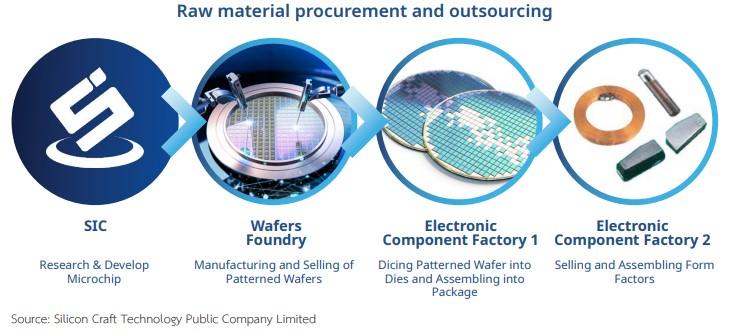
Raw Material Acquisition (Overall)
The sources of the Company's principal raw materials and contracted manufacturing services are as follows:
1) Raw Materials
The main raw materials used in the chip manufacturing process are wafers made from silicon to be cut into sheets for circuit patterns with light (Photolithography) as specified by the Company. The production of wafer sheets is an upstream industry that entrepreneurs in Thailand have not yet been able to operate. Therefore, the wafers must be imported from overseas. There are only a few operators in the industry worldwide where factories obtain contracts for wafer production. However, only 10 operators in the group of technologies are suitable for the Company’s products. Wafers were purchased from a major supplier in Singapore, or a world-class wafer manufacturer. The Company has a policy to mitigate the risk of dependence on such suppliers and prepares for the production of products in new technology groups by seeking new partners of wafer factories. Currently, the Company has a number of wafer manufacturers in its database from various countries, such as Singapore, South Korea, People’s Republic of China, and Taiwan.
2) Contracts for Service Hiring
Operating in the design of integrated circuit systems, the Company therefore has to hire another company that provides services for manufacturing, assembling, and testing microchips in various forms and shapes (Form Factor) required by customers, such as glass rods, plastic rods or coils. The Company has hired both domestic and foreign operators depending on the type of products and costs. Therefore, the outsourcing process needs long-term planning for all products to prevent capacity shortages and reduce a risk of late delivery.
3) IC Design Engineer
In addition to the raw materials and contracted services described above, another critical component of the Company's business operations is its pool of engineers specializing in integrated circuit design, a field in which Thailand faces significant limitations in the availability of qualified professionals. The Company has addressed this challenge by actively engaging with educational institutions, co-organising training activities and knowledge-sharing programmes for engineering students in disciplines relevant to the Company's business, with the aim of fostering career awareness and encouraging more individuals to pursue this profession. As the Company is the only operator in Thailand whose core business is dedicated to the design and development of RFID system devices, it has consistently attracted the majority of professionals with such expertise in the country.
To support future growth, the Company will continue to collaborate with educational institutions as well as relevant agencies and organizations to promote knowledge development and talent cultivation in related fields, with the goal of expanding the pipeline of qualified professionals. In addition, the Company plans to recruit specialized overseas talent with relevant expertise to join its team. As of December 31, 2025, the Company employed a total of 137 engineers.
Production Policy (Overall)
Note: As a fabless company, the Company has no wafer fabrication facilities or production lines.
Distributors (Overall)
The Company sources wafers from a principal supplier based in Singapore, which has served as a key business partner with a commercial relationship spanning more than 20 years. To mitigate concentration risk arising from the limited number of wafer manufacturers in the market, the Company has actively pursued engagements with additional wafer foundry partners. As a result, the Company now maintains an approved vendor list comprising wafer manufacturers across multiple countries, including South Korea, the People's Republic of China, and Taiwan.
Production Capacity (Overall)
| Item | Unit | Unit (if Other) | Used | Capacity |
|---|---|---|---|---|
| - | Others | - | 0 | 0 |
Domestic/Overseas Purchase Proportion (Overall)
| Raw Material | Source Country | Value |
|---|---|---|
| Wafer | Singapore | 0 |
Nature of Business — Overview
Introduction
Silicon Craft Technology Public Company Limited is a designer, researcher and developer of integrated circuits (ICs) or microchips for RFID systems. The Company focuses on the development, design and qualification of application-specific integrated circuits (ASICs), which are either customized to meet the specific needs of customers (Exclusive Product) or developed by the Company for various customer groups to apply in their business expansion (Standard Product).
The Company does not have its own factory or production line (Fabless/Factoryless Company). Instead, it hires manufacturing partners to produce its designs, including wafer fabrication, microchip testing and sorting and microchip cutting and packaging in various forms and shapes. The Company is involved in monitoring and controlling the manufacturing process to ensure that the microchips meet its requirements. The microchips are then sold by the Company under its own "SIC" trademark, both in the form of microchips and integrated into various materials in different forms and shapes (IC packaging, Form Factor) according to their applications, such as wire-bonded, plastic stick or glass stick. This allows customers to use the Company's microchips in their RFID tags or readers as needed.
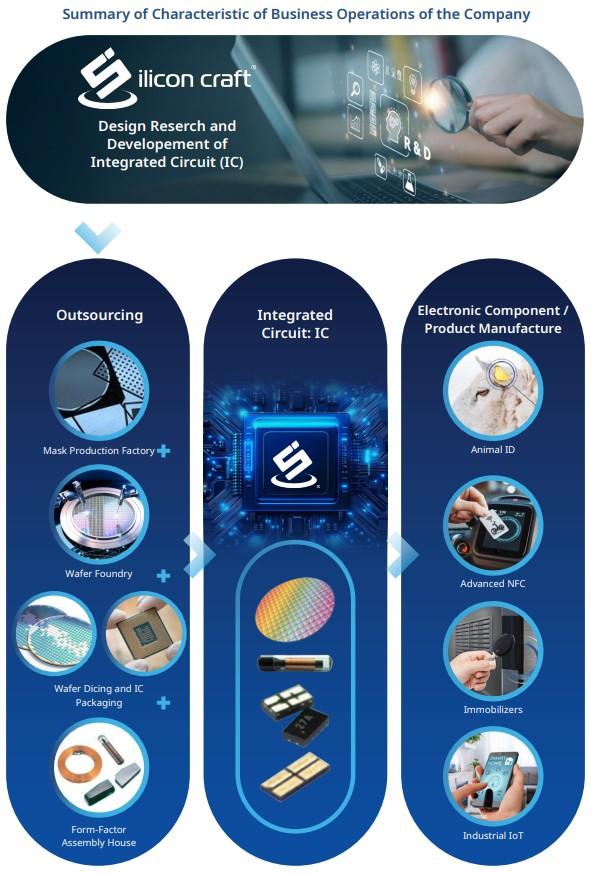
Projects Under Construction
Has Projects Under Construction (Y/N)
No
Debentures & Bills of Exchange
Has Debentures (Y/N)
No
Convertible Securities
Has Convertible Securities (Y/N)
No